Applications
Textiles, flags and soft signage
Sublimation suits polyester flags, soft signage and textile panels where low weight, foldability and strong colour matter.
Best uses for sublimation
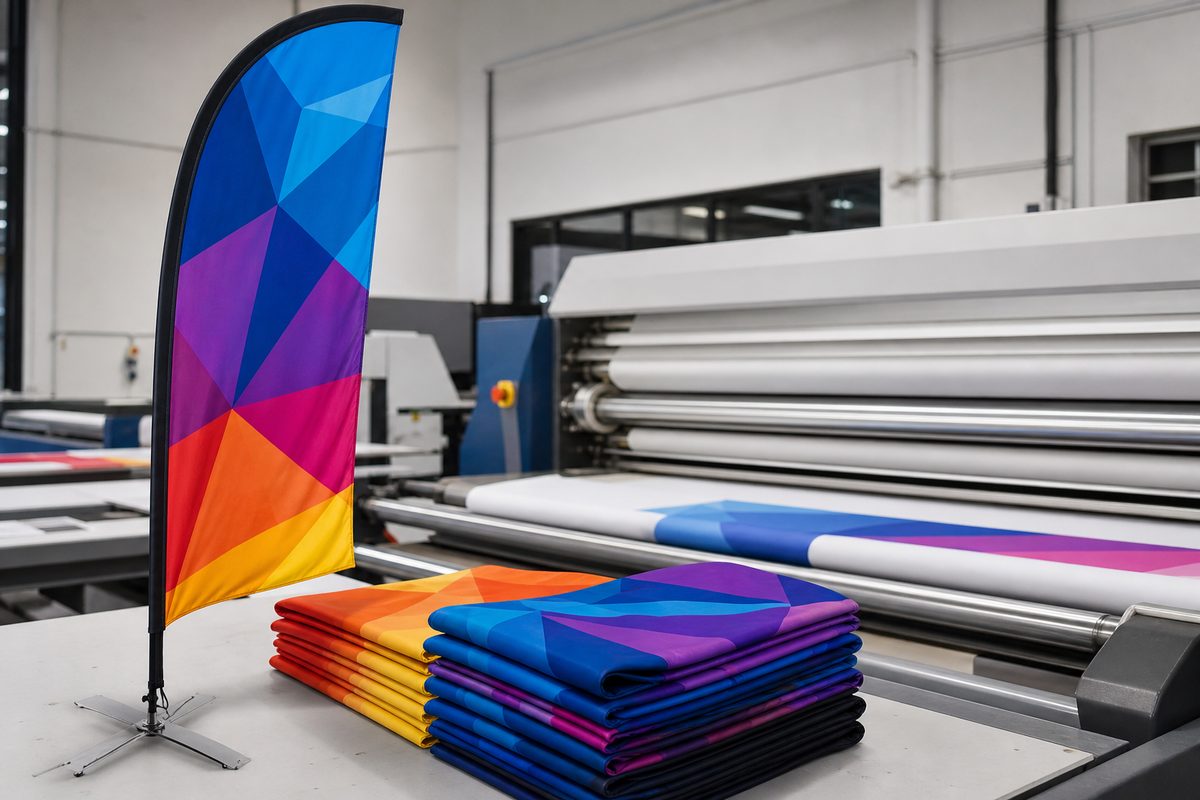
Sublimation is the standard choice for polyester flags, feather banners, sportswear panels, soft signage and cushion covers. The dye turns to gas during heat transfer and bonds into the polyester, so the print stays flexible and does not sit as a layer on top of the fabric.
It is the right process when you need fabric that can be folded, stitched or tensioned without a heavy ink film cracking. It is not for cotton or blended fabrics with low polyester content, because the colour strength drops and the transfer becomes inconsistent.
Polyester work that suits sublimation well:
- Flags and feather banners
- Backdrops and soft signage
- Sportswear cut panels
- Cushion cover faces
Transfer and heat control
For this work, print first onto transfer paper, then move the image to polyester in a calender. Keep paper tension, fabric feed and heat steady across the run, because small changes show up as uneven density, ghosting or soft edges on text and logos.
Test colours after pressing, not only from the paper print. Sublimation can shift after heat, especially reds, blues and deep neutrals. A result that looks dull on paper can open up on fabric, while another can overshoot and become too strong once transferred.
Colour and fabric checks
Fabric finish affects the final result. Bright white polyester gives the cleanest colour, while cream casts, recycled yarn variation or textured weaves can mute solids and change skin tones. For double-sided flags, expect show-through, not a separate front and back image with equal density.
Match profiles to the transfer paper, ink set and fabric type you actually use. If blacks look brown after pressing, or fine detail fills in, adjust the file and RIP settings for the pressed result, not the pre-transfer appearance.
Washing and handling limits
Because the dye is inside the polyester, sublimated fabric handles repeated folding better than many surface-printed textiles. That said, washing practice still matters. Harsh detergents, high heat and rough mechanical action can dull colour faster, especially on lightweight flag fabric.
Check seam areas, hems and stretched sections after the first wash cycle, because distortion shows there first. For cushion covers and sportswear panels, confirm that the fabric recovers properly after pressing so the finished item keeps shape as well as colour.
What our Large Format Printing customers say
Verified Google reviews
Polyester and flag printing
A note on the fabric, the transfer method and the end use is enough to start.