
Guides
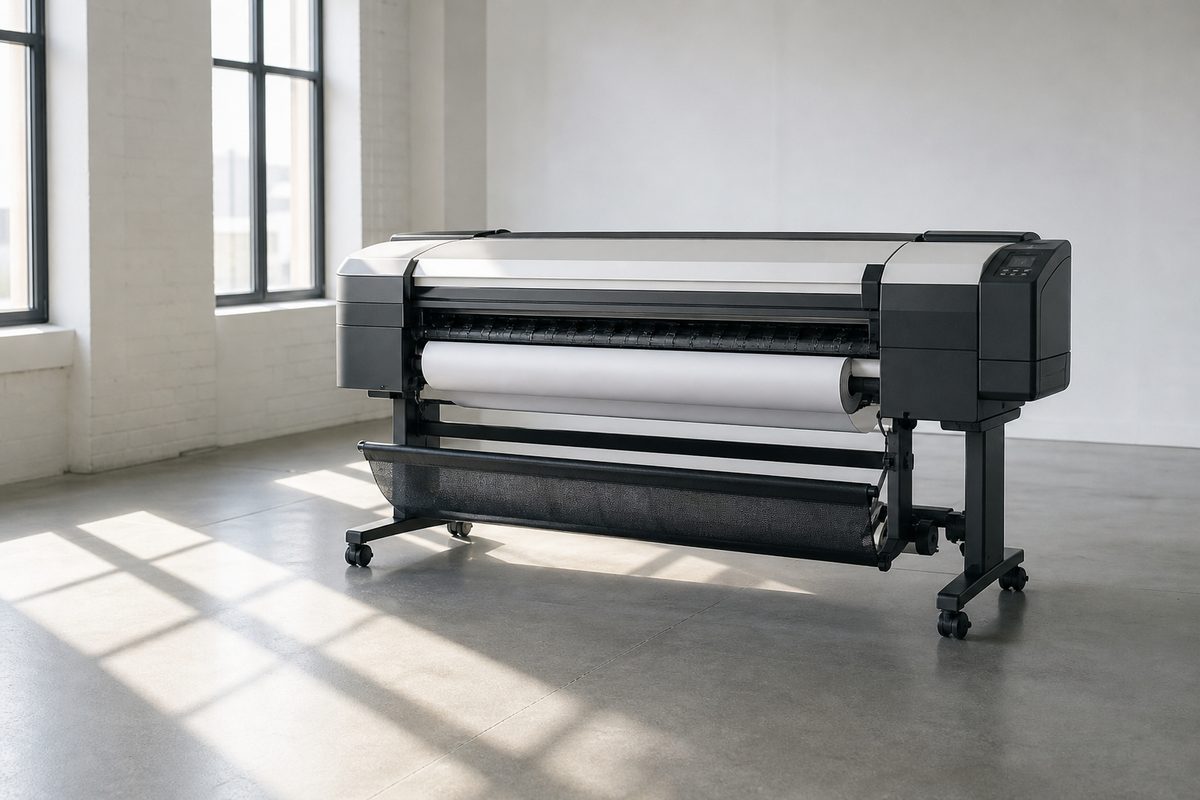
Choosing a first large format printer
Begin from the jobs you already sell every week. Ink type, print width, RIP and floor space should follow that list, not occasional requests.
Sold work comes first
Write down the jobs that already pay the bills, not the jobs you hope to win later. Split them into indoor stickers, outdoor signs, posters, labels, textile items and rigid board work. Note the substrate, expected durability, finish and typical run size. That list tells you what the printer must handle every day.
Be careful with rare requests. If one unusual job appears once a month, it should not drive the whole purchase. Buying around occasional banner lengths, garment work or board printing can leave a first machine oversized, underused or more complex than the shop needs.
List what the shop already sells, in this order:
- Most frequent job types
- Media used
- Print sizes
- Outdoor life needed
- Average daily volume
Match ink to application
Eco-solvent suits common sign and sticker work on self-adhesive vinyl, banner and poster media, with outdoor durability and familiar finishing. UV makes sense when the work includes rigid boards or varied non-porous materials. Sublimation fits textile and soft signage production, where the final product is fabric rather than vinyl or board.
Choose the chemistry that covers most of your weekly output with the fewest compromises. If the shop mainly prints decals and banners, do not start with a textile-focused setup. If board work is occasional, outsourcing it can cost less than carrying a machine chosen for a small part of turnover.
Choose practical machine size
Width should follow the media you buy the most. A wider machine can expand options, but it also changes floor space, media handling and waste on smaller jobs. If most orders fit standard sticker, poster or banner widths, size the printer around those rolls first.
Head count and speed should match realistic daily demand. A first printer that is too fast for the workflow can sit idle while still needing maintenance discipline. A capable RIP matters just as much, because nesting, colour control, pass settings and cut workflow affect real output more than headline speed.
Plan space and airflow
Measure the working area around the printer, not just the footprint. You need room for loading rolls, trimming prints, storing media and moving finished work without scuffing. Also check power requirements, dust levels and where the RIP workstation will sit in relation to production.
Ventilation must suit the ink chemistry and the room. Poor airflow can affect operator comfort and make a small print area harder to manage through a full day of production.
What our Large Format Printing customers say
Verified Google reviews
Narrowing a first printer
Planning a first printer? List the main jobs, the media and the widths you need.