Guides
Eco-solvent or UV
Choose by the work you print the most. Eco-solvent suits flexible signage, UV suits rigid boards and unusual surfaces.
Match the printer to the job
Eco-solvent is the better fit for self-adhesive vinyl, posters, wallpapers and PVC banner. It lays down well on roll media used for everyday sign work, and the printed film stays flexible for application over flat panels and gentle curves.
UV becomes the stronger option when the job list includes rigid boards, direct-to-substrate work or media that does not accept solvent ink. If you print onto foam board, acrylic, correx, wood or speciality stocks, UV opens jobs that eco-solvent cannot handle directly.
In short, the split between the two methods runs like this:
- Eco-solvent for vinyl and banner runs
- UV for rigid panels and mixed substrates
- Mixed work: decide by the core production mix
Drying and curing behaviour
Eco-solvent prints need time for the solvents to flash off before finishing. A print can look ready, but trapping solvent under laminate too soon can lead to silvering, edge lift or adhesive problems later. Production planning matters when same-day lamination is expected.
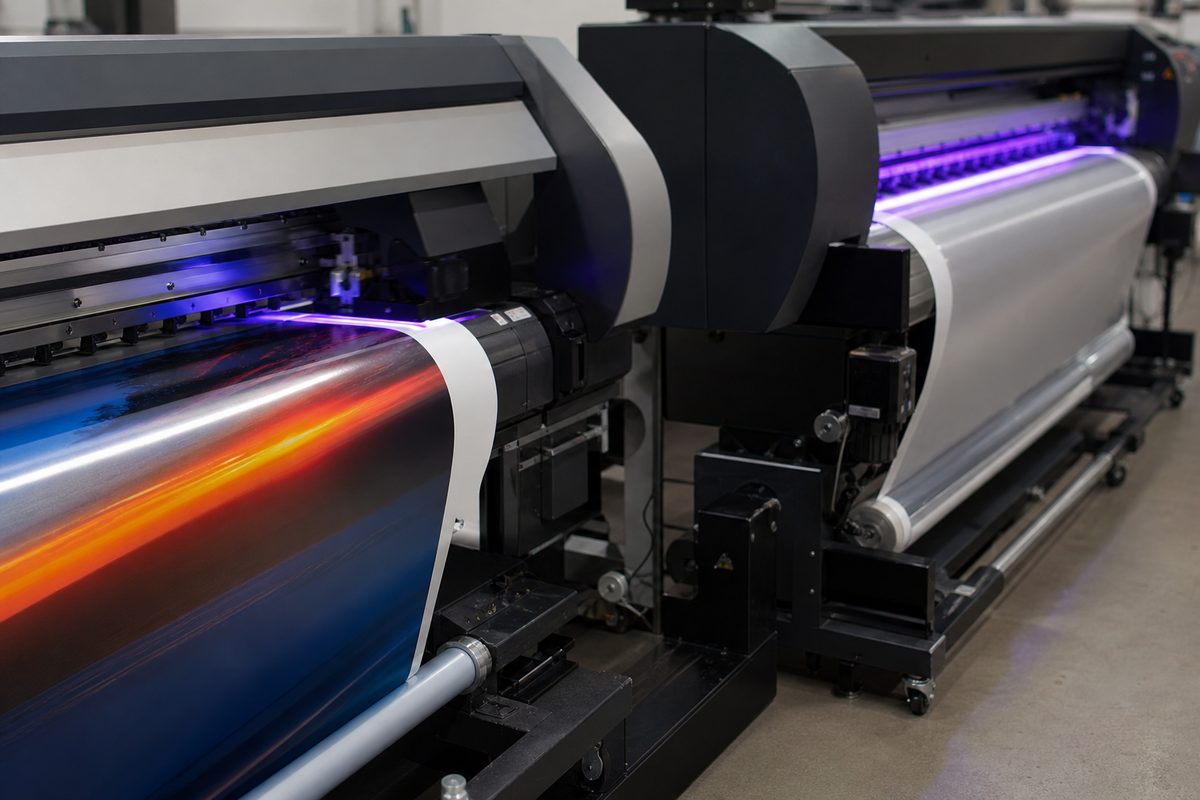
UV ink cures at the printer under the lamps, so sheets and rolls come off ready for handling straight away. Instant curing pays off when work must move quickly to cutting, packing or dispatch. The trade-off is that cured ink can be less forgiving on applications that need extra stretch.
Smell, ventilation and running logic
Eco-solvent carries a noticeable ink smell and needs sensible airflow around the machine and printed output. UV has a different odour profile, especially during curing, and the working area still needs proper ventilation. In both cases, room conditions affect consistency and operator comfort.
Ink cost is not just the bottle price. Look at the media you can print, the finishing steps you can remove, the reprint risk on problem substrates and how much labour sits around the printer. A lower ink cost per square metre does not always mean the lower job cost.
Durability and lamination choices
For outdoor stickers, vehicle graphics and graphics that will be handled a lot, eco-solvent output is laminated to improve scratch resistance and keep colours stable for longer. Lamination also helps during fitting, especially on prints that need clean squeegee movement.
UV output can offer good durability on many display and board applications without lamination, which saves a finishing step. Still, if the print will face abrasion, chemicals or frequent contact, test the real surface performance first. The right choice depends on the use, not the ink name.
What our Large Format Printing customers say
Verified Google reviews
Weighing eco-solvent against UV
Which jobs do you print, and on what media? Those two answers settle which method fits.