
Inks and media
Eco-solvent inks
Eco-solvent ink performance depends on storage, handling and compatibility. Small routine checks help avoid banding, nozzle loss and lamination problems.
Use the right CMYK set
Eco-solvent inks are supplied as matched CMYK sets. Keep all four channels in the same ink family and do not mix chemistries between brands or ranges. Different solvent strength, pigment load and drying behaviour can upset colour balance, curing and head performance.
Check compatibility against the printhead type in your printer before changing ink. A set intended for one head design can cause poor jetting, overspray or unstable nozzles in another. If a change is necessary, flush the ink path with the matching cleaner first so old residue is not left in dampers and lines.
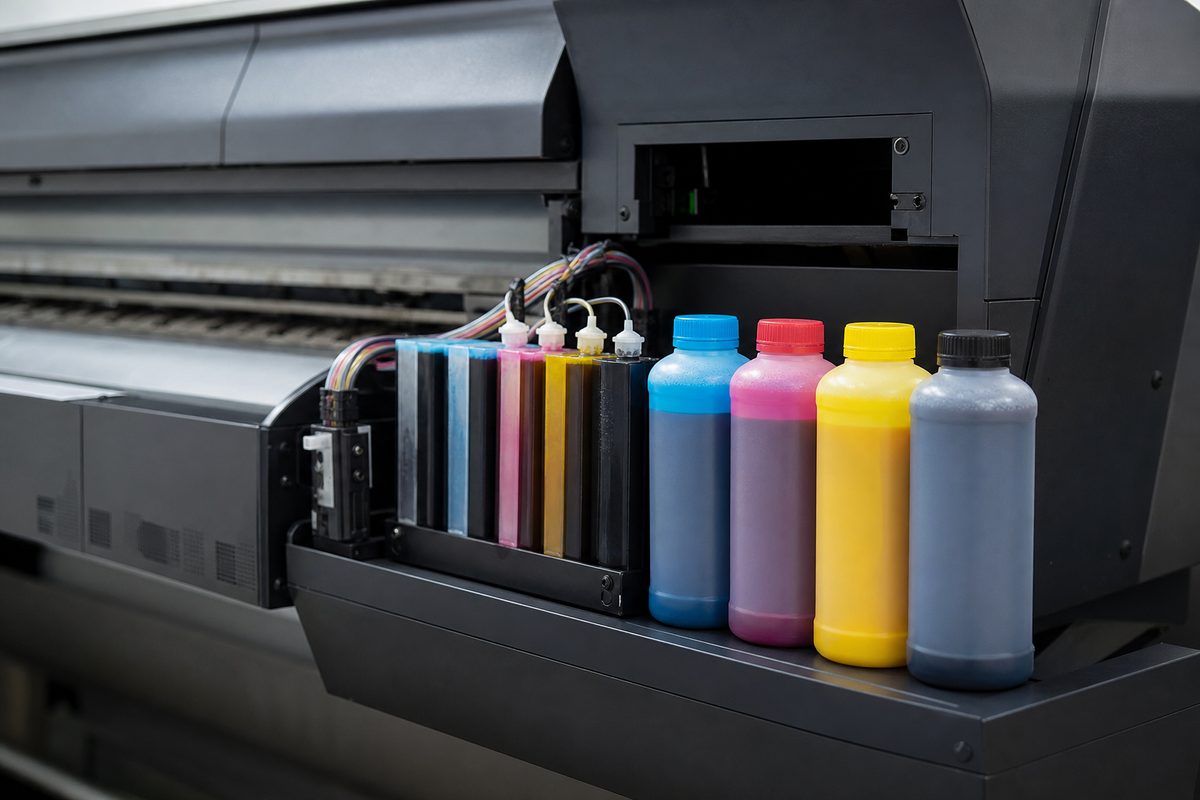
Store and agitate correctly
Store eco-solvent inks sealed, upright and away from direct heat. Stable room conditions help keep viscosity consistent, which supports even droplet formation across long print runs. Avoid leaving partially used bottles open, because solvent loss can thicken the ink and shift drying behaviour.
Shake bottles as recommended for the ink set before loading, especially colours that carry heavier pigment. Gentle agitation redistributes settled pigment without introducing excessive foam. If a cartridge or bottle has been standing for a long period, agitate it before use rather than relying on circulation alone.
Eco-solvent bottles last longer when they are kept this way:
- Keep bottles sealed when not in use
- Store upright on a level shelf
- Avoid heat and direct sunlight
- Agitate before loading into the system
Keep lines primed and clean
Air in the ink path shows up as missing nozzles, intermittent banding and weak colour density. Keep lines primed so ink reaches the head without bubbles or starvation. After any ink change, confirm the system is drawing ink evenly and that dampers and caps are not allowing air to enter.
When flushing, use the cleaner matched to that ink chemistry. A mismatched cleaner can leave residue, swell parts or react badly with remaining ink. Flush thoroughly enough to clear contamination, then refill and stabilise the channels before expecting consistent nozzle checks and repeatable colour.
Allow drying before lamination
Eco-solvent prints need outgassing time before lamination. If trapped solvent remains in the print, adhesive can haze, silvering can appear and the laminate may fail early at the edges. Drying time varies with ink load, media coating, coverage and the amount of ventilation around the print.
Ventilation matters during printing and drying. Good airflow helps carry solvent vapour away and supports more even drying across solid areas. Do not stack fresh prints tightly or roll them up immediately after heavy coverage, because that slows solvent release and can mark the surface.
What our Large Format Printing customers say
Verified Google reviews
Eco-solvent ink questions
Name the ink set, the printhead type and the cleaning step your question is about.