Inks and media
UV-curable inks
UV-curable inks need the right formulation, steady white ink circulation and careful storage to keep colour, adhesion and curing consistent.
Choose the right formulation
Flexible UV ink is used where the print will bend, fold or wrap after curing. It helps reduce cracking on films and other media that move in finishing or fitting. Rigid formulations suit hard boards and flat surfaces where adhesion and scratch resistance matter more than bend performance.
If the wrong ink type is used, problems show up after printing, not at the machine. A print can look fine, then crack on contour cuts, chip at edges or lose adhesion during handling. Match the ink to the media behaviour first, then profile and cure settings.
Manage white and varnish
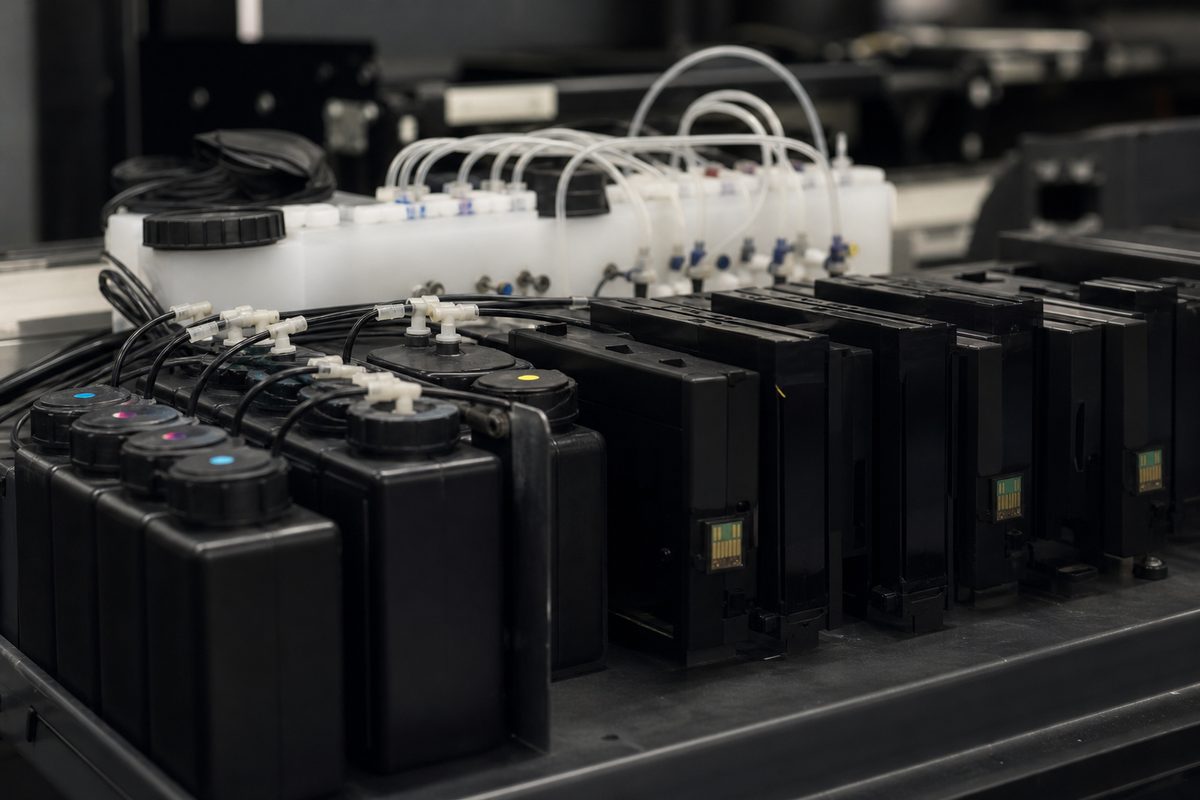
White UV ink settles faster than process colours because of its heavier pigment load. Circulation and regular agitation keep density more even across the day. If white sits too long, nozzle loss, weak opacity and grainy laydown become more likely, especially on underbase and spot white work.
Varnish adds a clear layer for gloss, matte effects or selective texture, but it also changes the cure load on the print. Check lamp output, pass mode and layer build so the surface cures fully without staying tacky. Poorly managed varnish can mark easily in finishing.
Routine control for white ink and varnish:
- Keep white ink circulating
- Agitate as recommended
- Check opacity during runs
- Test varnish layer build
Store ink away from light
UV ink must be kept away from direct light and unnecessary exposure around the printer area. Even before printing, contamination and premature reaction can shorten usable life. Keep containers sealed when not in use, and avoid leaving ink or cleaner open during maintenance.
Shelf life matters with white and varnish in particular because settled material and older chemistry can change print behaviour. Rotate stock so older ink is used first, and do not mix old and fresh batches casually in the same workflow without checking colour and cure response.
Use cleaner with purpose
UV cleaner is for controlled maintenance, not as a general substitute for ink. Use it to clear residue during approved cleaning steps and to keep contact areas free of cured build-up. Too much cleaner left in the ink path can affect firing and delay stable colour after restart.
When a printer shows missing nozzles or uneven laydown, check the simple causes first: ink condition, white settling, contamination and cured residue near the head face. Cleaner helps when used correctly, but it does not fix expired ink, poor storage or incorrect curing settings.
UV inks on BuyThis
A six-colour flexible LED-UV set with matching cleaner:
What our Large Format Printing customers say
Verified Google reviews
UV ink choices
Flexible or rigid ink, white handling and cleaner questions all get a written reply.