Printers
Sublimation printers for textiles
Sublimation printers print onto transfer paper, then release colour into polyester under heat and pressure. Good paper choice and correct profiles keep transfer clean.
How sublimation output works
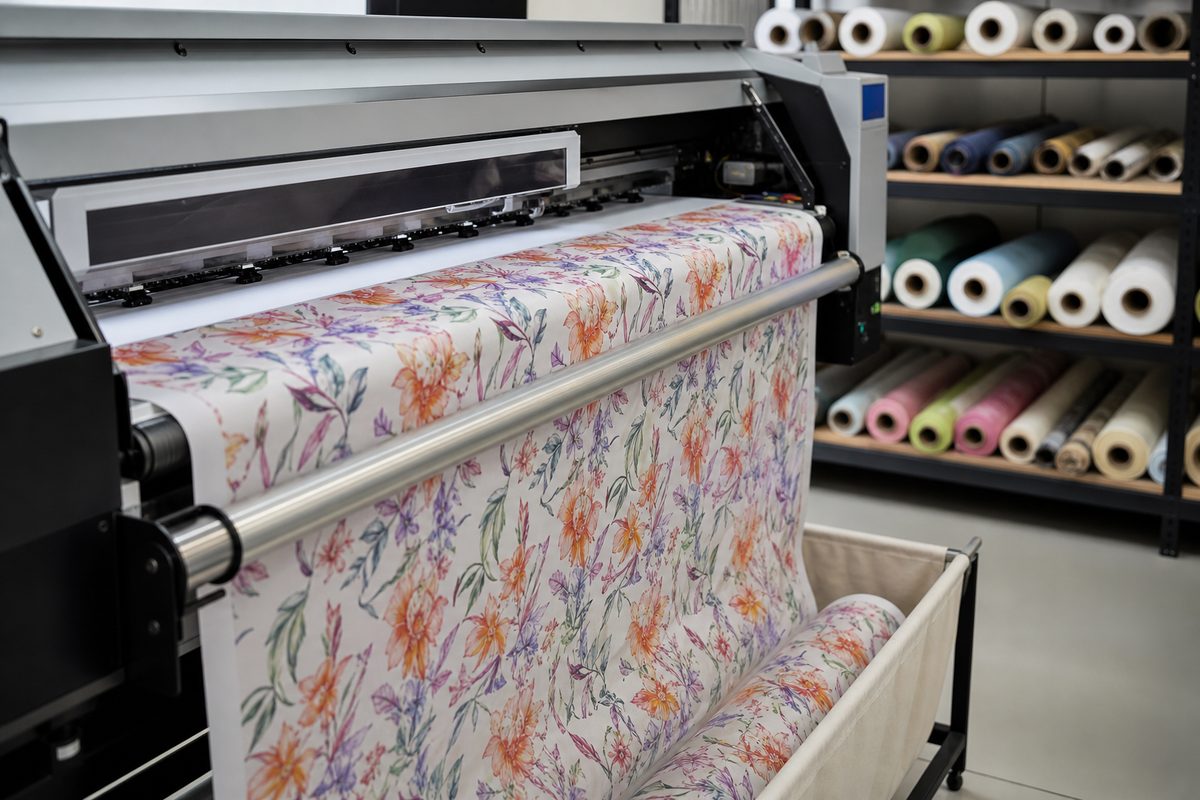
A sublimation printer lays dye onto coated transfer paper, not directly onto fabric. The printed sheet then runs through a calender or heat press, where heat turns the dye to gas and drives it into polyester fibres or a polyester coating.
This process suits flags, sportswear, display fabric and soft signage because the colour sits in the material rather than as a surface layer. The result is flexible, washable output that resists cracking, provided print, paper and transfer settings are matched properly.
Choosing transfer paper well
Paper weight affects feed stability, ink hold and release at transfer. Lighter paper can dry fast and reduce curl, but it may cockle if ink limits are too high. Heavier paper can track steadily on longer runs, yet needs enough heat to release fully.
Watch for edge lift, waviness and uneven take-up before blaming the printer. If black blocks look muddy or fine text feathers, check paper coating, humidity in the room and whether the profile is built for that paper, not just for the ink set.
For clean transfers, keep to four paper basics:
- Keep paper dry and sealed
- Match profile to paper type
- Check take-up tension
- Set ink limits conservatively
Reducing ghosting on transfer
Ghosting happens when paper shifts against the textile during transfer, leaving a faint shadow beside the image. It shows up most on sharp logos, text and solid edges. Static, fabric shrinkage and poor paper release can all contribute to movement at the press stage.
Use enough pressure to hold the stack flat without crushing texture. Let prints dry before transfer, trim sheets cleanly and keep the fabric square as it enters the press. If ghosting persists, review dwell time and whether the fabric profile is over-inking the transfer.
Profiles for fabric results
A good sublimation profile is built for the transfer paper and the final fabric together. The same artwork can shift noticeably between a bright white sports knit and a coated display textile. Black density, red saturation and grey balance can need different limits.
For flags, allow for show-through and lower apparent density when light passes through the material. For apparel, watch skin tones and small text after transfer, not only on paper.
Sublimation printers on BuyThis
Two 1.8m sublimation packages, with InkRIP or FlexiPRINT:
What our Large Format Printing customers say
Verified Google reviews
Fabric printing questions
Questions on transfer paper, fabric profiles and printer packages are welcome.