Printers
UV flatbed printers
UV flatbed printers handle rigid media and objects without mounting to vinyl first. They suit short runs, prototypes and direct print work on mixed materials.
Direct print on rigid media
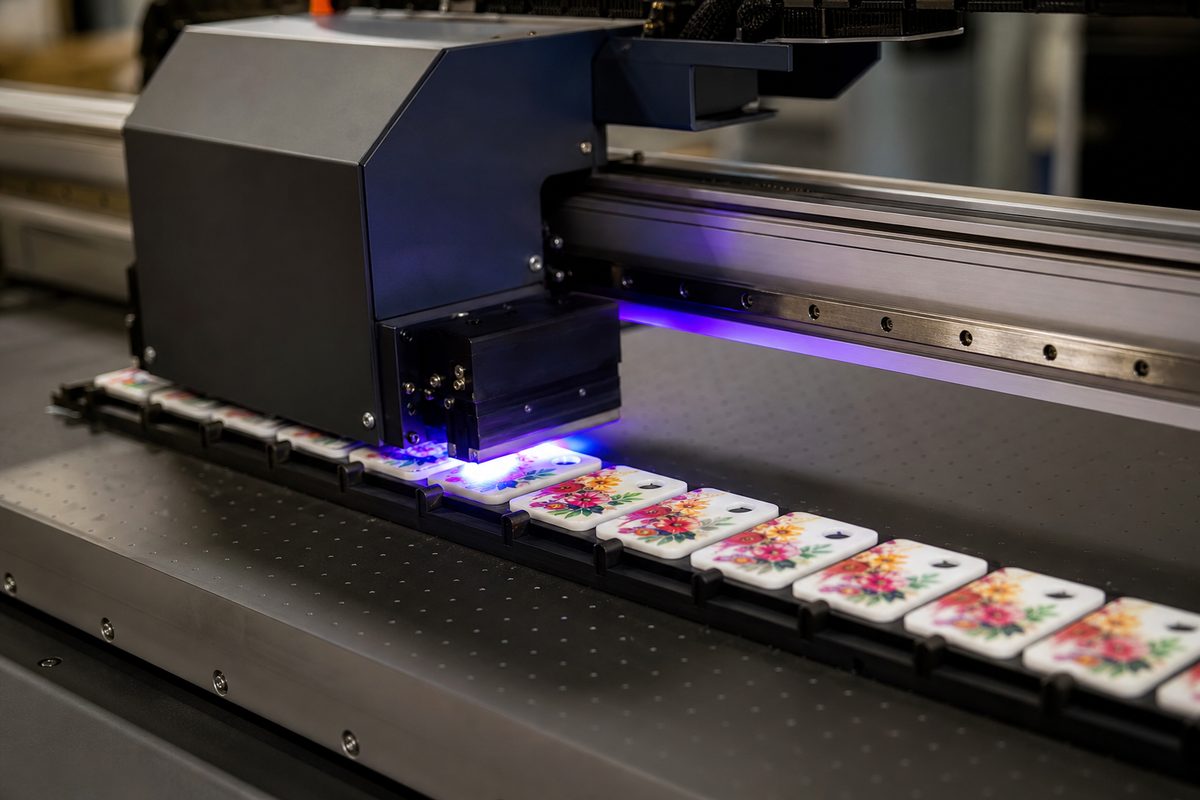
A UV flatbed prints straight onto boards and objects, which removes the mounting stage and keeps registration tighter on small graphics. Typical work includes acrylic signs, wooden panels, aluminium pieces, glass items and promotional products that need a clean direct finish.
For mixed jobs, the key check is surface compatibility. Smooth, coated and non-porous items can print differently from raw timber or powder-coated metal. Test adhesion first, confirm the curing level is not brittle, and check that the item sits flat enough for consistent head clearance.
Rigid items a UV flatbed can print on directly:
- Acrylic panels
- Wood and MDF pieces
- Metal plates
- Glass items
- Promotional products
Ink layers and surface effects
White ink matters when the substrate is dark, clear or metallic. It can be laid down as a base for colour, or used on its own for simple spot areas. Varnish adds gloss accents, texture effects or a protective top layer where handling marks are a concern.
Adhesion depends on more than ink alone. Some materials accept UV ink well, others need a primer to prevent scratching or edge lift. Keep the process consistent by matching primer use to the material type, then checking tape pull, rub resistance and small text edges before production.
Height, jigs and repeat work
Z-axis height control allows printing onto thicker objects that would not run through a roll machine. The practical limit is not just thickness, but also how even the top surface is. Any bow, raised edge or warped corner increases the risk of head strikes and inconsistent dot placement.
For batch work, jigs save time and improve repeatability. They hold small items in a fixed position so artwork lands correctly across multiple pieces. Jigs suit promotional products, plaques and short production runs where loading accuracy matters more than raw speed.
Repeat batches stay aligned with a short setup routine:
- Check object flatness
- Set safe head clearance
- Use jigs for repeat placement
- Test alignment before a batch
Desktop format for small items
A 600 x 900 mm desktop flatbed suits compact rigid work, prototype pieces and item decoration where a full-size table is unnecessary. It fits jobs that are too awkward for roll media but do not need a large bed, keeping waste and handling lower on short runs.
UV flatbed printers on BuyThis
Two FlatPRINT desktop packages, one with each RIP:
What our Large Format Printing customers say
Verified Google reviews
Desktop UV flatbed fit
Describe the items, materials and sizes you want to print.