Gauteng
Centurion printer viewings
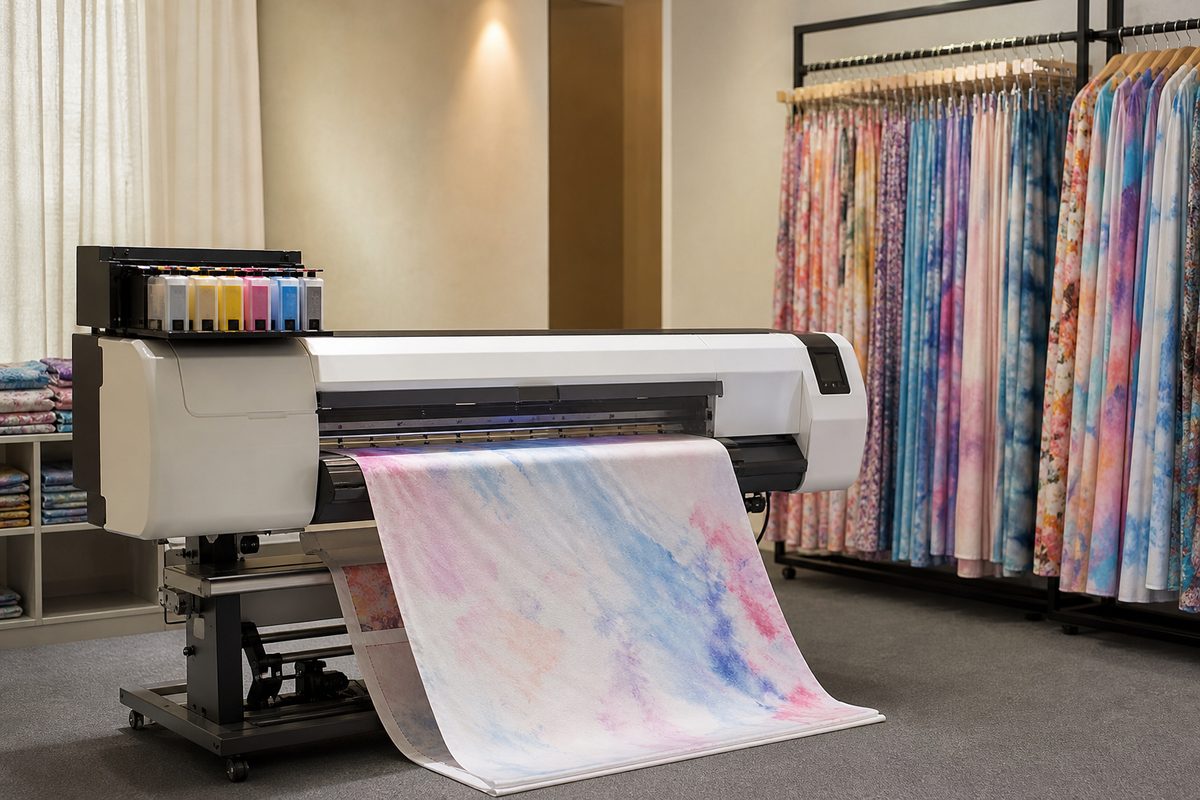
Centurion appointments can centre on sublimation printing for polyester fabric, with practical discussion around transfer paper, calender settings, post-heat colour shift and fabric profiles.
Transfer paper handling
Transfer paper controls how evenly sublimation ink releases under heat and pressure. Paper cockle, loose winding and variable coating can shift density before the image reaches fabric. Keep rolls sealed until loading, let them stabilise in the print room, and watch edge curl at the feed path. Take-up tension needs to be firm enough to stay straight, but not so tight that the printed paper buckles after heavy ink areas.
Printed transfer should dry fully before winding, especially on dense fills and dark colour builds. Residual moisture in paper can cause smearing on the back of the roll and uneven gas release in the calender. Paper width should also match fabric width sensibly, because large unsupported fabric margins can wander under heat. Mirror orientation, panel spacing and trim marks need to suit the sewing plan before any metres are printed.
Transfer paper problems show up in these ways:
- Edge curl
- Backside smear
- Uneven release
- Feed wander
Calender transfer control
Calender settings decide how completely dye leaves the paper and enters polyester. Too little dwell or low heat can leave prints flat, with weak blacks and a dusty cast in saturated colours. Excess heat or pressure can push colours off target, flatten fabric texture and mark lightweight knits. Start from a stable temperature and speed combination, then adjust one variable at a time while comparing paper residue and final fabric colour.
Fabric tension through the calender matters as much as heat. Overstretched fabric can cool with a narrower width, altered handle and visible distortion in repeat patterns. Poor alignment between paper and textile can show as blurred edges or a faint shadow from movement at the nip. Protective tissue should stay clean and wrinkle-free, because contamination and creases can transfer marks straight into open background areas.
Profiles after heat
Colour on transfer paper is not the colour on finished polyester, so profiling must be built around the post-heat result. Ink limits that look safe on paper can oversaturate after transfer, especially in reds, blues and dense composite blacks. Fabric-specific profiles help separate media behaviour from printer behaviour, because knit, woven and coated polyester can shift hue, depth and contrast differently under the same press conditions.
Profile testing should follow the exact production path: same paper, ink set, print mode, calender settings and fabric batch where possible. Reprofile when changing paper coating, moving to a different polyester construction, or after noticeable maintenance changes that affect laydown. Neutral greys, skin tones and dark brand colours reveal profile mismatch first, while ghosting and gloss variation point to transfer conditions rather than the colour build alone.
For a Centurion appointment to see sublimation printers, mention your fabrics and paper when you write in through the contact form.
What our Large Format Printing customers say
Verified Google reviews
Polyester fabric transfers
Share the fabrics you transfer onto and the paper you use, and an appointment can be set around them.