Gauteng
Kramerville printer viewings
For signage, vinyl and poster work, a Kramerville viewing centres on eco-solvent roll printers and the heater, take-up and drying choices behind a clean finish.
Heater control under load
Heater layout affects how eco-solvent ink lands, spreads and dries on cast vinyl, monomeric vinyl and coated poster stock. Separate pre, print and post heaters give finer control than a single broad setting. Pre-heat softens the coating or face film, print heat steadies dot formation, and post heat drives off more solvent before the print reaches the take-up. Poor control shows up as mottling, graininess, soft edges or blocked detail in heavy passes.
Temperature stability matters as much as the maximum setting. Long runs expose weak heater control when the first few metres look different from the middle of the roll, especially on solid colours and skin tones. Media that shrinks or buckles under excess heat can throw off feed calibration and panel length. Shops printing everyday signage should look for steady drying at normal production speeds without forcing heat high enough to curl liners or leave the vinyl difficult to laminate.
Take-up and media handling
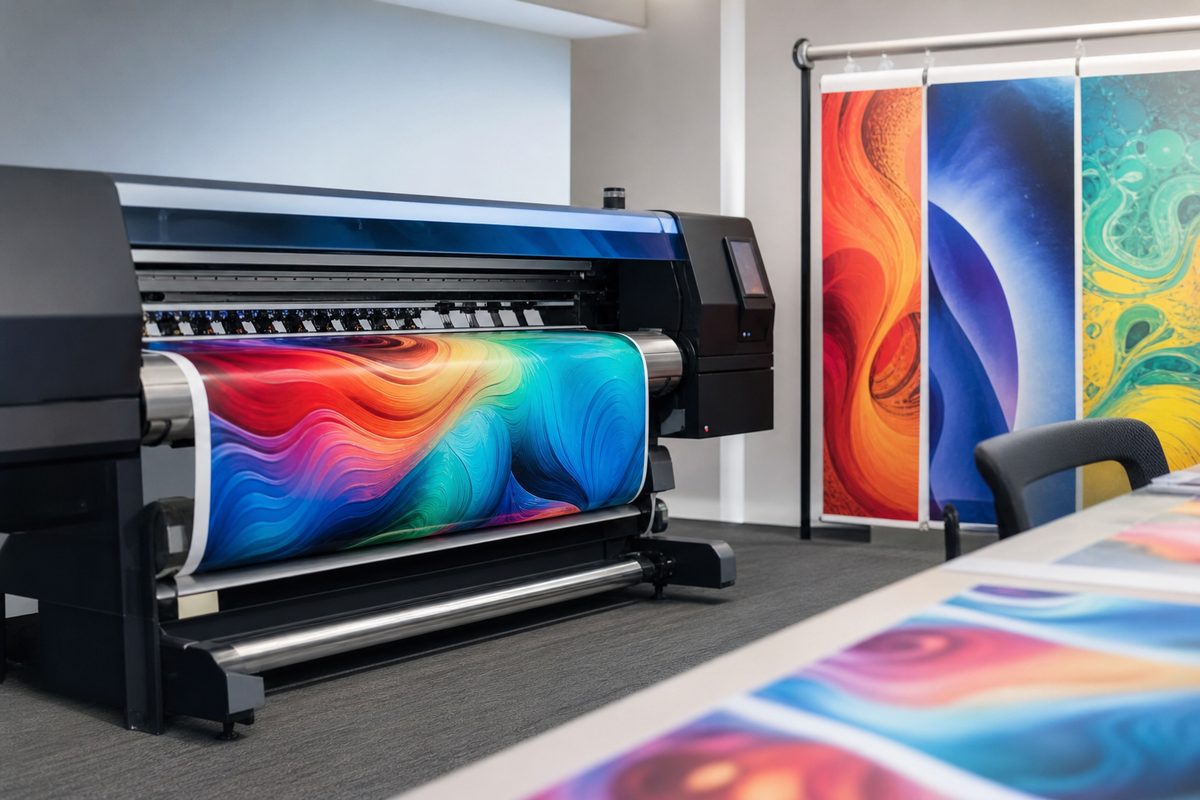
Take-up design separates steady production from constant manual correction. A driven take-up with even tension keeps the printed web flat, stops edge wander and reduces head strikes caused by loose loops near the platen. Good handling becomes more noticeable on longer poster runs and narrow banner or vinyl jobs where one side can creep. Poor take-up tension can also mark soft prints, telescope the roll or shift the media enough to upset repeatable contour alignment later.
Media range is not only about width. Day to day work can mix paper posters, adhesive vinyl and lighter banner stocks, each needing different grip, vacuum and pinch pressure. Narrow grit rollers, stable pinch placement and consistent feed compensation help when changing from slick film to textured paper. Shops should watch for machines that stay square on common signage media without fussy loading, frequent skew resets or constant adjustments to keep tracking straight over distance.
Four handling points separate smooth runs from wasted media:
- Even take-up tension
- Stable edge tracking
- Consistent feed compensation
- Controlled pinch pressure
Lamination timing and finish
Lamination timing on eco-solvent prints depends on how much solvent remains in the ink film when the job leaves the printer. Faster drying from balanced heater control and good air movement can shorten the wait before cold lamination, but heavy ink loads on dense colour still need care. Premature lamination can trap solvent, leading to silvering, tunnelling, adhesive haze or a surface that keeps changing after the print is mounted.
Poster work and short-term indoor signage can leave the printer without lamination, so surface dryness and scuff resistance matter straight away. Vehicle decals, floor graphics and handled retail graphics demand a more stable print before overlaminating or applying application tape. Shops comparing machines should judge the full workflow: how soon prints can be rewound cleanly, trimmed without edge curl, and laminated without the finish fighting trapped solvent or soft ink.
Eco-solvent roll printers can be viewed in Kramerville once an appointment is booked through the contact form.
What our Large Format Printing customers say
Verified Google reviews
Eco-solvent signage work
A short note on your usual media and laminate gives the Kramerville appointment a clear starting point.