Western Cape
Paarden Eiland printer viewings
Banner and large graphic work raises a width question first: what a 1.8m printer handles well, when 3.2m pays off, and what that means for joins, space and stock.
Width choice on output
Printer width changes how many jobs need panel joins. A 1.8 metre machine covers many standard banners, pull-up graphics and wall pieces, but larger fascia, backdrops and long runs need splitting into panels. Panel planning adds time in prepress and finishing because overlap, weld allowance and eyelet positions must be set before printing. Any mismatch in colour, feed or trim shows immediately on joined graphics.
A 3.2 metre machine reduces panel count on oversized work and can keep one-piece output for many banner faces and event graphics. Fewer joins mean fewer places for silvering, curl or visible seams under strong light. Larger width also changes daily scheduling because broad rolls take longer to load, align and tension correctly. Shorter jobs can tie up a wider printer if media changes are frequent.
Multi-panel banner work needs four allowances settled first:
- Panel overlap
- Weld allowance
- Trim accuracy
- Eyelet spacing
Space around the machine
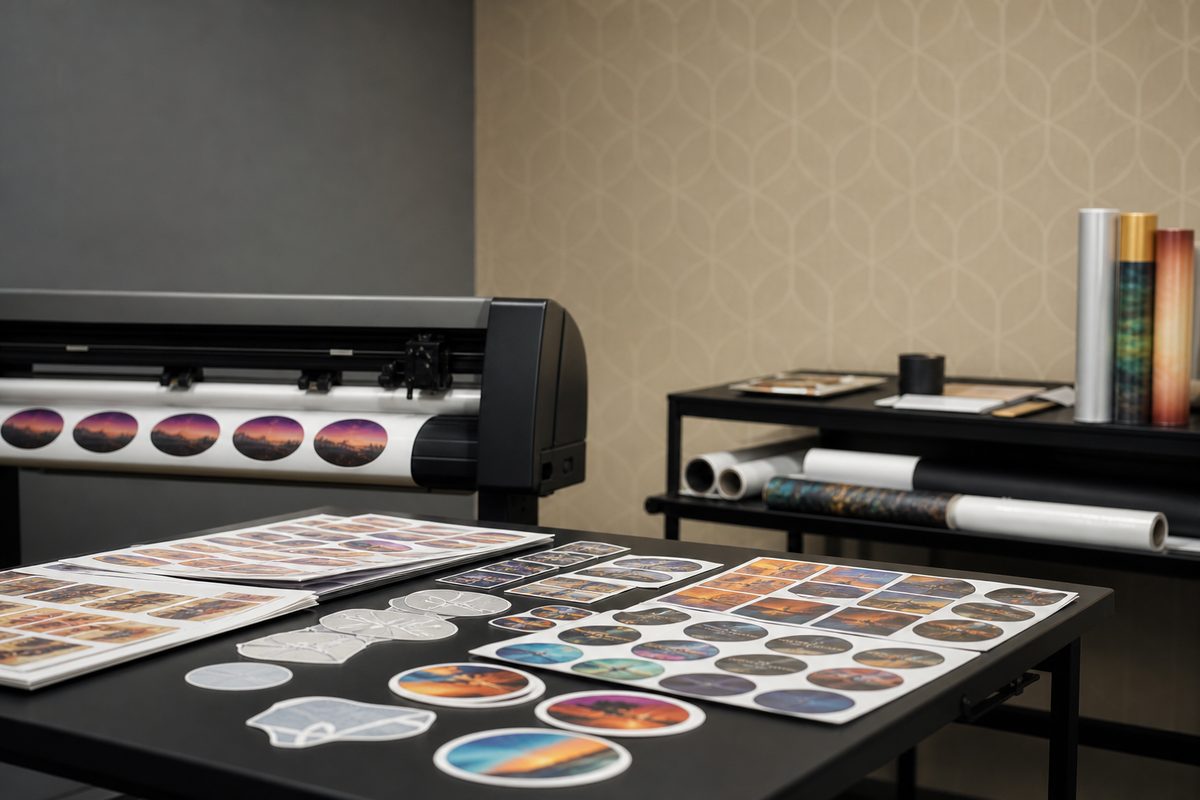
Floor space affects printing quality as much as fit through the door. A 1.8 metre printer suits tighter production rooms because roll handling, take-up loading and finished print inspection need less clear area. Operators can keep media close by and move prints to trimming with fewer handling steps. Less unsupported material at the output side also helps on lighter banner stock that can crease if dragged or folded too early.
A 3.2 metre machine needs wider clear zones at the front, rear and sides for safe loading and straight feeding. Heavy jumbo rolls are harder to lift, centre and lock without marking the edges. Long output paths matter because broad prints can touch the floor, pick up dust or develop pressure marks before curing or trimming. Finishing benches, slitters and welders also need enough space to match the larger sheet size.
Managing media stock
Media stock decisions can favour 1.8 metre production when the job mix is varied. Common banner, vinyl and film lines can be easier to source in narrower widths, which can simplify reordering and reduce partial rolls left on the rack. Offcuts are easier to repurpose for test strips, decals or short banners. Stock rotation also gets simpler because fewer large rolls sit unopened while niche jobs wait for matching media.
A 3.2 metre setup can lower waste on very large graphics if the same wide material moves steadily through the shop. Broad stock becomes awkward when only a small section of the width is needed, because each print leaves expensive unused area unless gangs are planned carefully. Matching laminate and compatible finishing materials also needs attention, especially when a job changes from one-piece output to panelled reprints on a different roll width.
A Paarden Eiland appointment is arranged through the contact form, with your usual banner sizes as the starting point.
What our Large Format Printing customers say
Verified Google reviews
Banner width choices
Set the appointment around your usual banner sizes, joins, space limits and media mix.