
KwaZulu-Natal
Pinetown printer viewings
Banner and vinyl rolls behave differently on the printer, and a Pinetown viewing keeps the conversation on loading, tension, take-up and finishing choices.
Load rolls square
Before the first panel, clear the media path of scraps, adhesive and dried ink and check the roll sits square on its shaft. Uneven loading shows up early as one edge walking forward, skewed panel lengths and head height changing across the width. Keep both pinch pressure and support pressure even from left to right, then feed enough material through to confirm the edges stay parallel before sending a full job.
Banner and vinyl react differently at the leading edge. PVC banner can have memory from the core, so the first metre can curl and lift toward the carriage path. Self-adhesive vinyl can telescope if the roll was stored badly, which pulls one edge tighter than the other. Trim a clean square lead, flatten the first section with steady feed tension, and avoid forcing the roll straight with extra pinch pressure.
A square, clean load starts with four basics:
- Square leading edge
- Even pinch pressure
- Parallel edge tracking
- Clean feed path
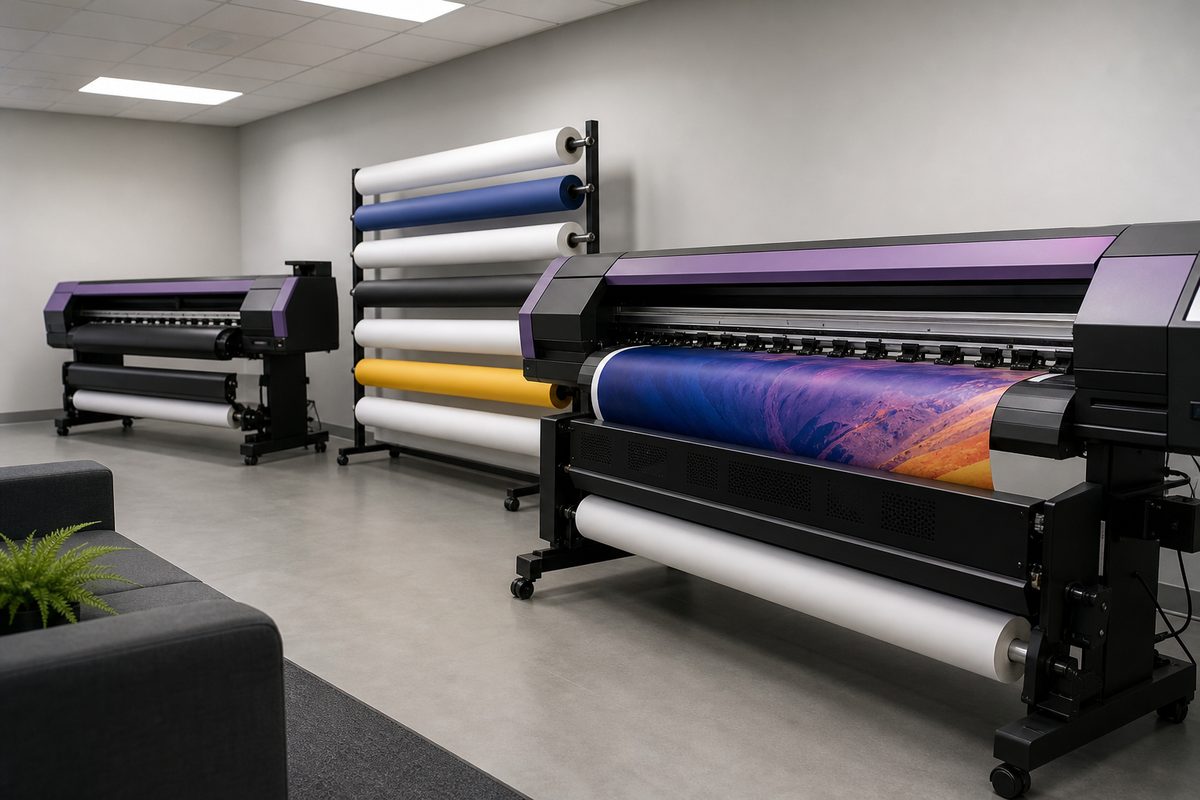
Manage tension and take-up
Take-up tension should remove slack without stretching the print. Excess pull can narrow the web, shift panel dimensions and exaggerate banding because feed calibration changes under load. Too little pull lets the printed area sag, which can mark wet ink on heaters, platen edges or rollers. Set a low take-up force, run a short printed length, then increase only until the web winds evenly and the print face stays clear.
Long banner runs need consistent winding across the full width. A soft centre and tight edges point to uneven core grip or the web entering the take-up at an angle. Vinyl needs extra attention when laminated later, because stretched prints can shrink back and expose white edges around contour cuts. Keep the dancer or slack loop stable, and watch the first few wraps for telescoping, ridges and side drift.
Control curl and finishing
Edge curl affects both print quality and finishing accuracy. Raised edges can catch the carriage, clip a head strike sensor or cause overspray on the outer image area. Reduce curl by letting the roll relax before printing, lowering unnecessary heat and avoiding excessive vacuum that cups thin vinyl at the platen holes. On banner, keep the outer edges supported so the material does not hinge downward as printed weight builds.
Hemming and eyelets change how a printed banner carries load, so image placement needs allowance from the start. Leave enough unprinted border for folding, welding or tape, otherwise solid ink can crack on the fold line and interfere with adhesion. Eyelets set too near the print edge can distort text when tensioned on site. For double-sided work, maintain panel squareness so hems line up and eyelet spacing stays consistent.
In Pinetown, roll printers are shown by appointment, booked through the contact form.
What our Large Format Printing customers say
Verified Google reviews
Banner and vinyl handling
List the banner and vinyl materials you load the most, and the Pinetown appointment can follow them.